Horizon
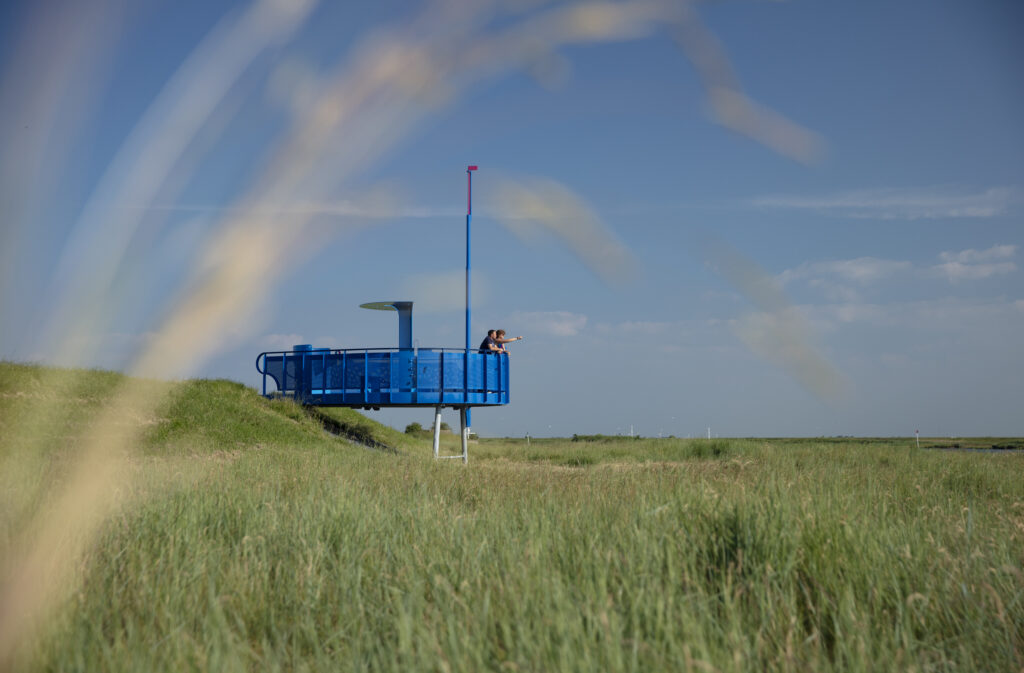
Horizon is a walkable structure, commemorating Boston, Lincolnshire’s connection to the history of the Pilgrims and their story’s global impact.

Artist
Artists Matthew Springett and Rhys Cannon create innovative and engaging site-specific installations. Their work aims to facilitate an interface between the person and place, enabling people to see and experience spaces in new and unexpected ways. Matthew and Rhys are qualified architects who both maintain interests in academia as well as running successful, award-winning architectural practices.
In the 1600s, a small congregation of separatists (known as the ‘Scooby Congregation’) decided to flee the UK and head to Holland.
They met at Scotia Creek in 1607, but on the night they were due to leave for Holland they were betrayed, captured and imprisoned in the Boston Guildhall.
A year later, the Pilgrims succeeded in their escape to Holland, before eventually sailing from Plymouth in September 1620, landing on 9 November at Cape Cod in New England.
Inspired by the significance of its site, this structure explores themes of nautical navigation by allowing the visitor to imagine journeys into the unknown and beyond the horizon.
Installed in June 2021, Horizon‘s metal viewing platform allows visitors to literally look out to the Wash and beyond, at an important spot in the story of the Mayflower Pilgrims and their voyage to New England in the 1600s, one of many transatlantic journeys leading to a complex and challenging history.
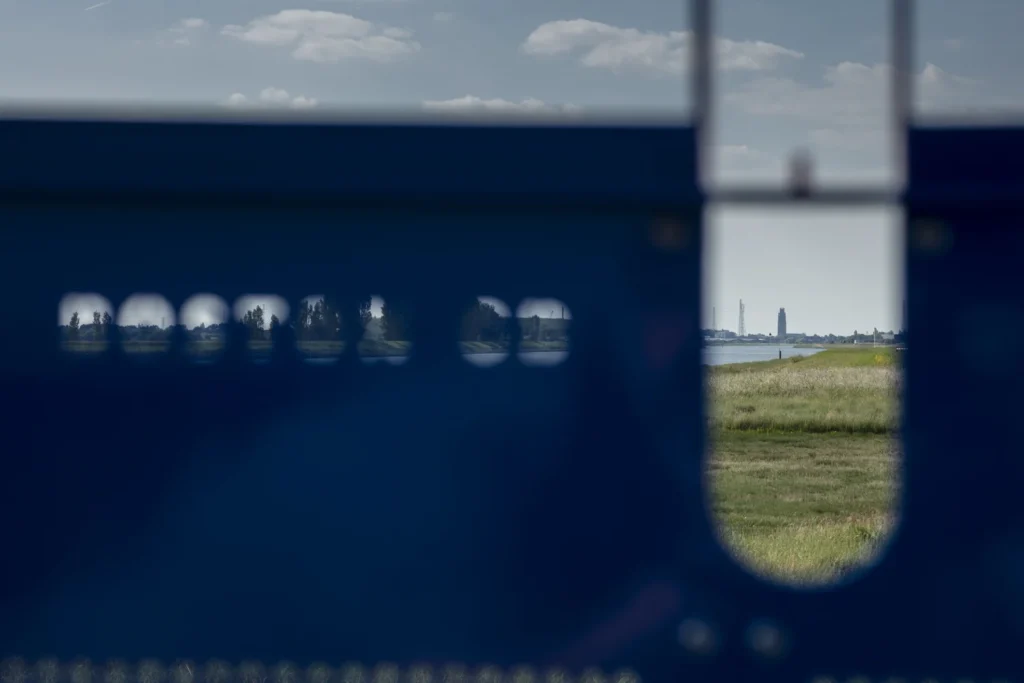
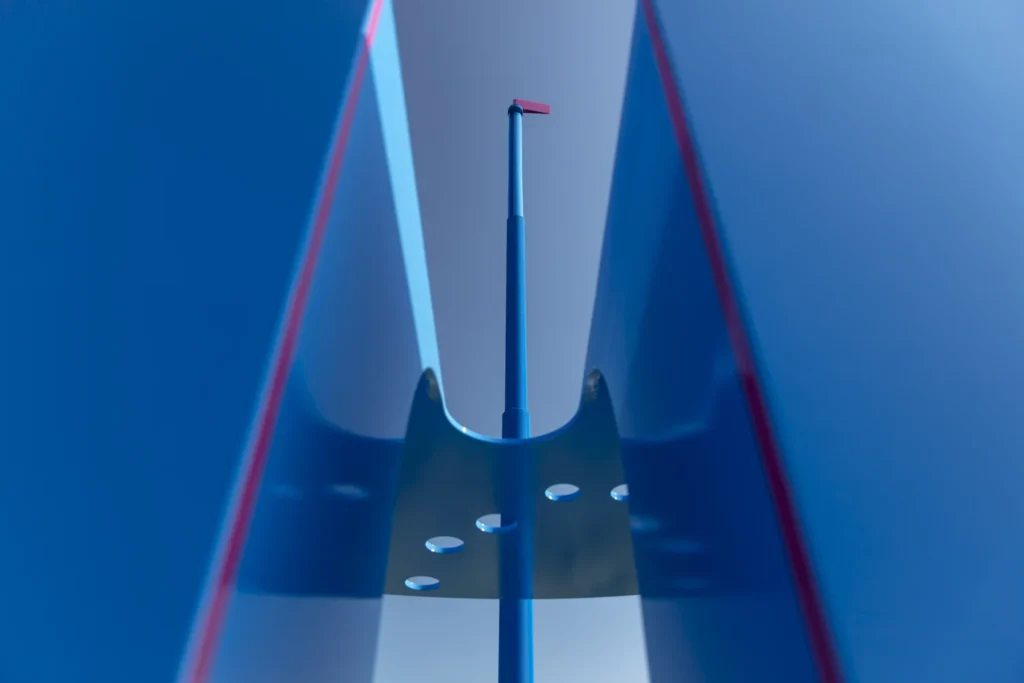

horizon explores themes of nautical navigation by allowing visitors to imagine journeys into the unknown and beyond the horizon, as the pilgrims once did.
The joint project between Transported, Boston Borough Council and Lincolnshire County Council was part of a series of projects in the Boston area commemorating the Mayflower’s 400th anniversary, called the Haven Commission, which also includes the Boston Buoys sculptures.
Horizon was also built as part of a series of installations along the Lincolnshire coast known as ‘Structures on the Edge’ which promote developing artwork and coastal architecture.

Artists Matthew Springett and Rhys Cannon were commissioned to create a piece that is inspired by the town’s maritime history.
MSA-Gruff (Matthew and Rhys’ artistic design partnership)’s long-time collaborators work to create innovative and engaging site-specific installations.
Their work aims to facilitate an interface between the person and place, enabling people to see and experience spaces in new and unexpected ways.
Matthew and Rhys are qualified architects who both maintain interests in academia as well as running successful, award-winning architectural practices.
“We conceived the installation as being created principally from treated, painted metal in a colour that is both subtle yet intriguing within the landscape.”
-MSA-Guff
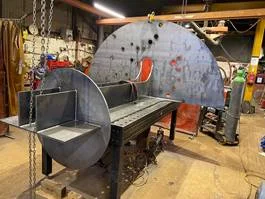
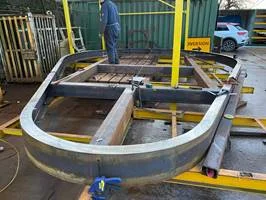
The structure incorporates an elevated 5m metal deck with a balustrade containing features depicting the navigational journey in the Mayflower’s history, and the stars in the night sky used to get there.
The deck is level with the top of the bank profile, and is accessed from it. The design considers themes of navigation relating to migration, flight and exploration of unknown worlds.
The platform provides shelter and has seating that can be altered by visitors to give views back to Boston, as well as out to sea.
Always changing and infinitely complex, the structure references navigational instruments and methods used by maritime travellers for millennia. Along with meteorological, solar and astronomical readings, the main destinations of the Pilgrims’ subsequent journeys are traced through time from their first point of departure.
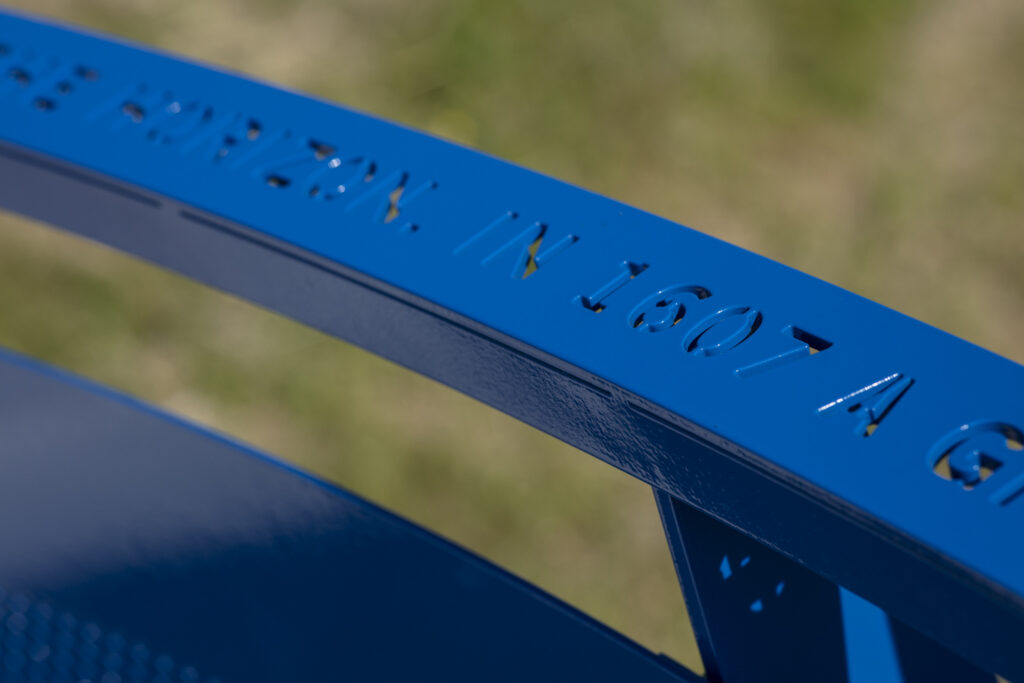
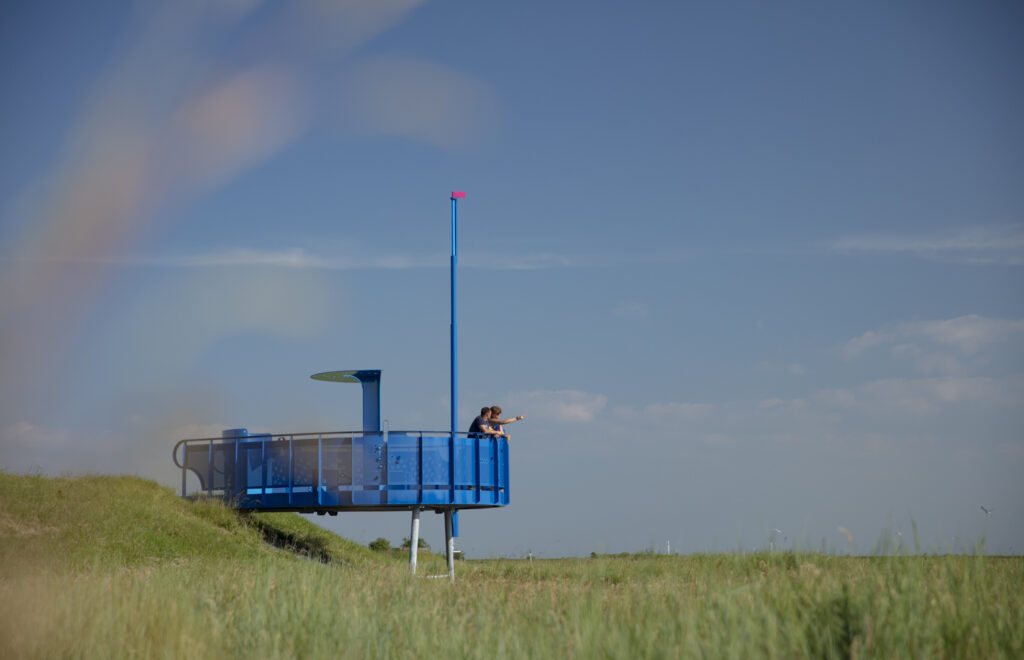
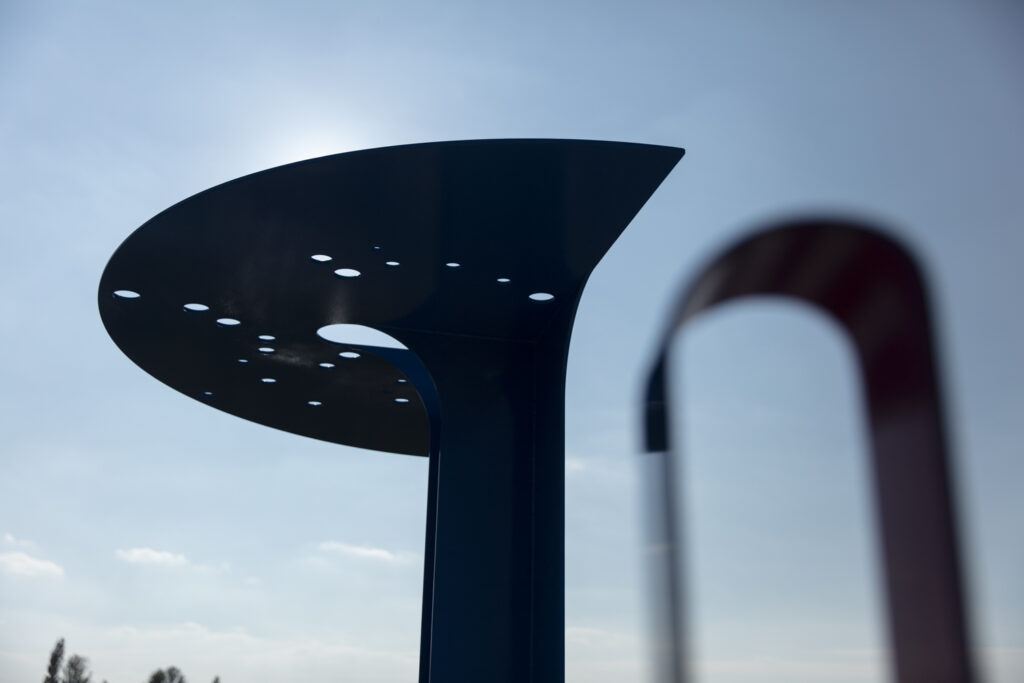
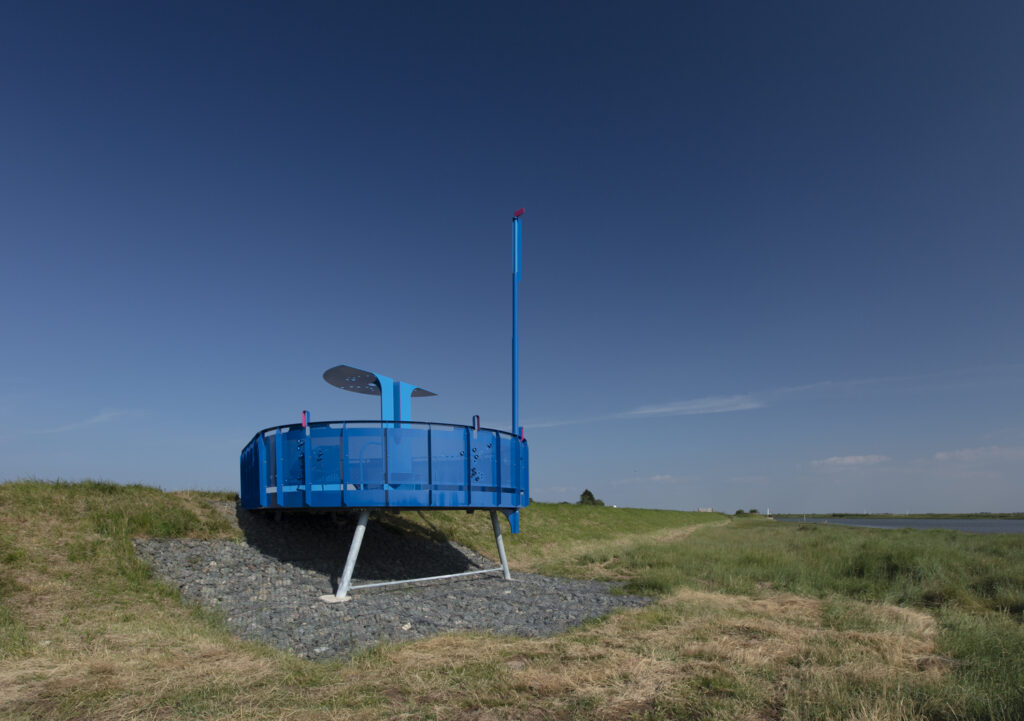
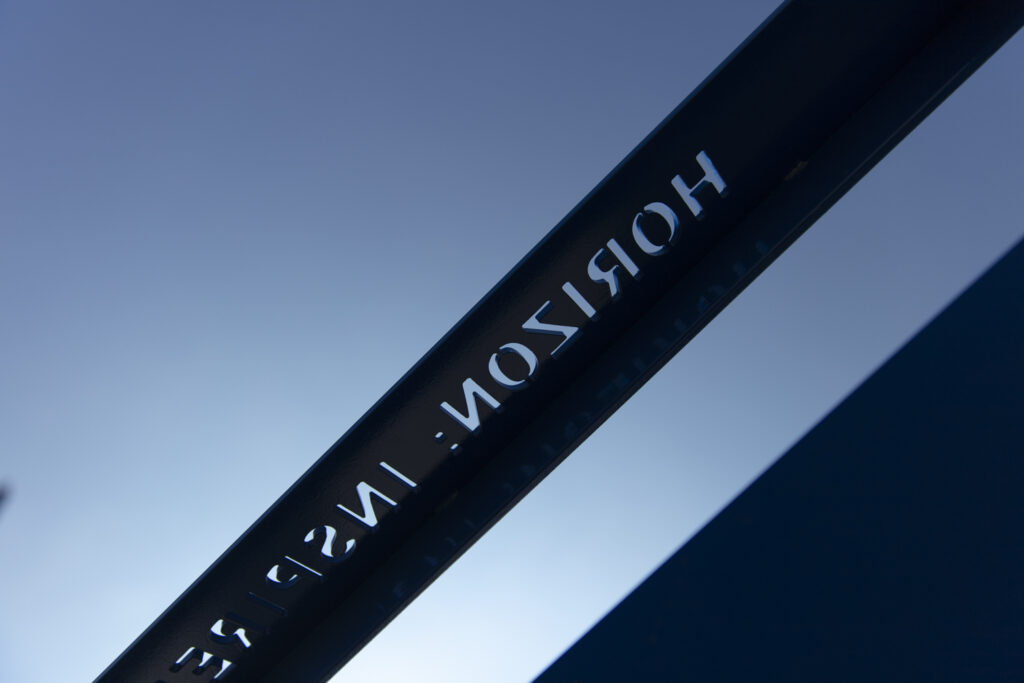
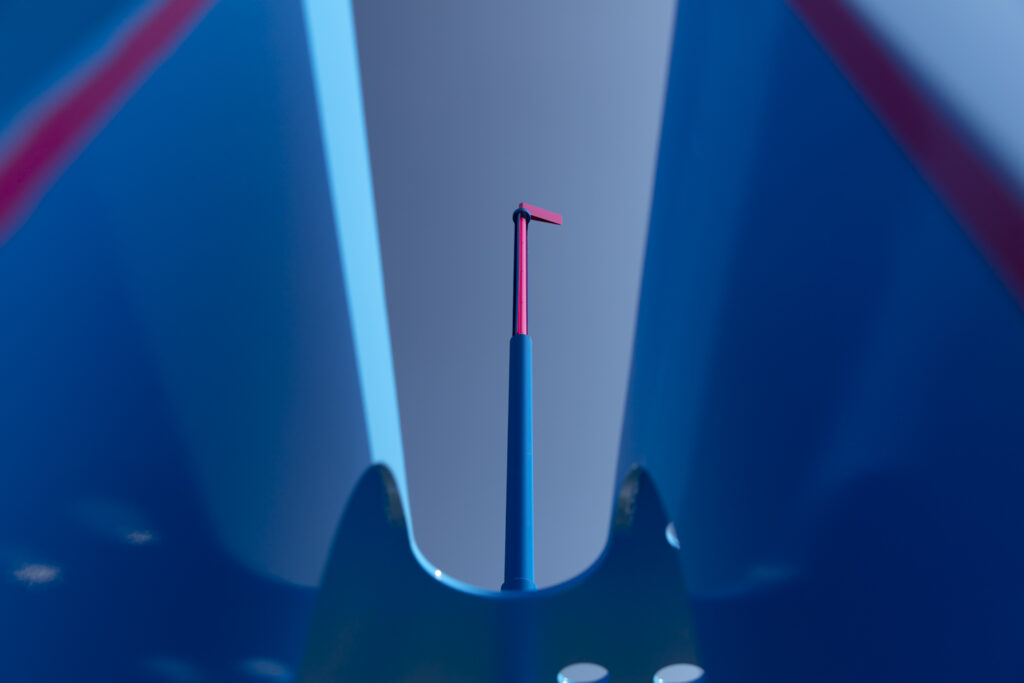
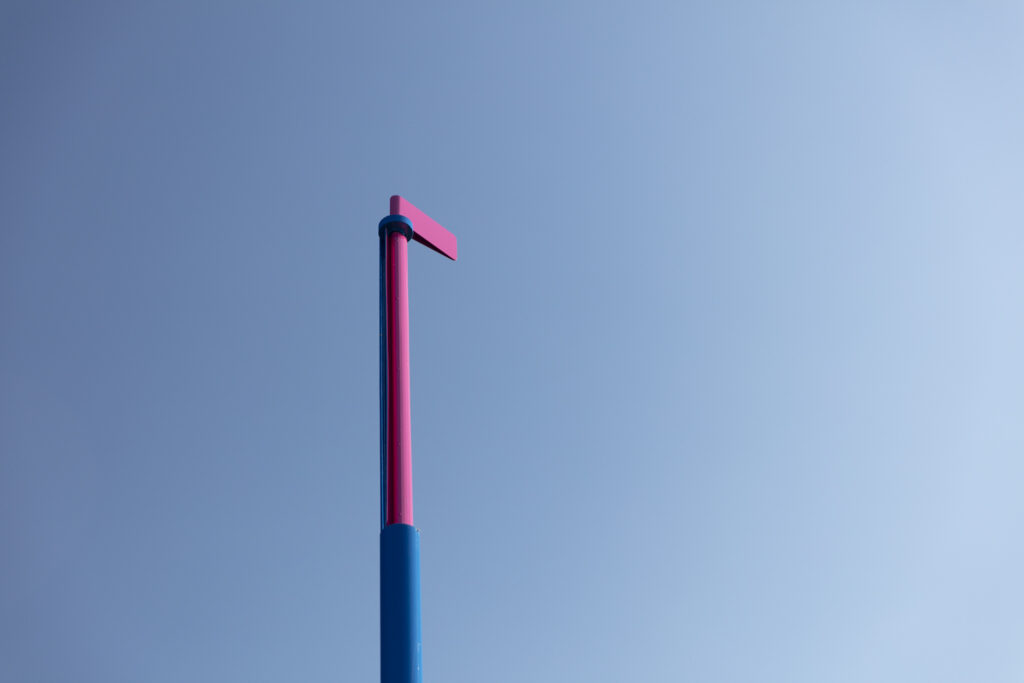
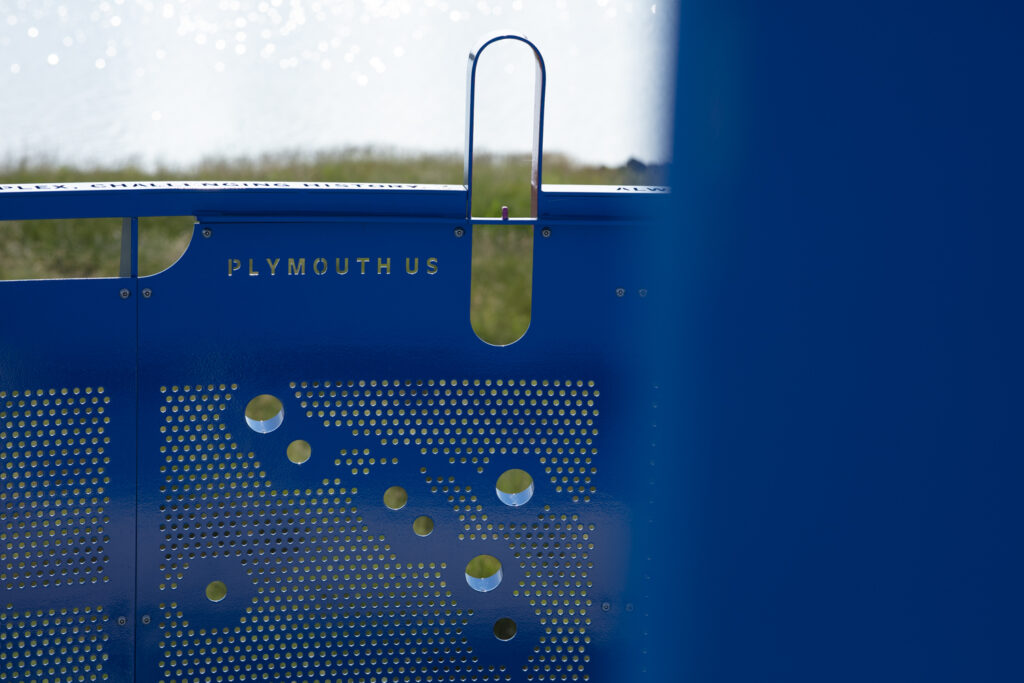
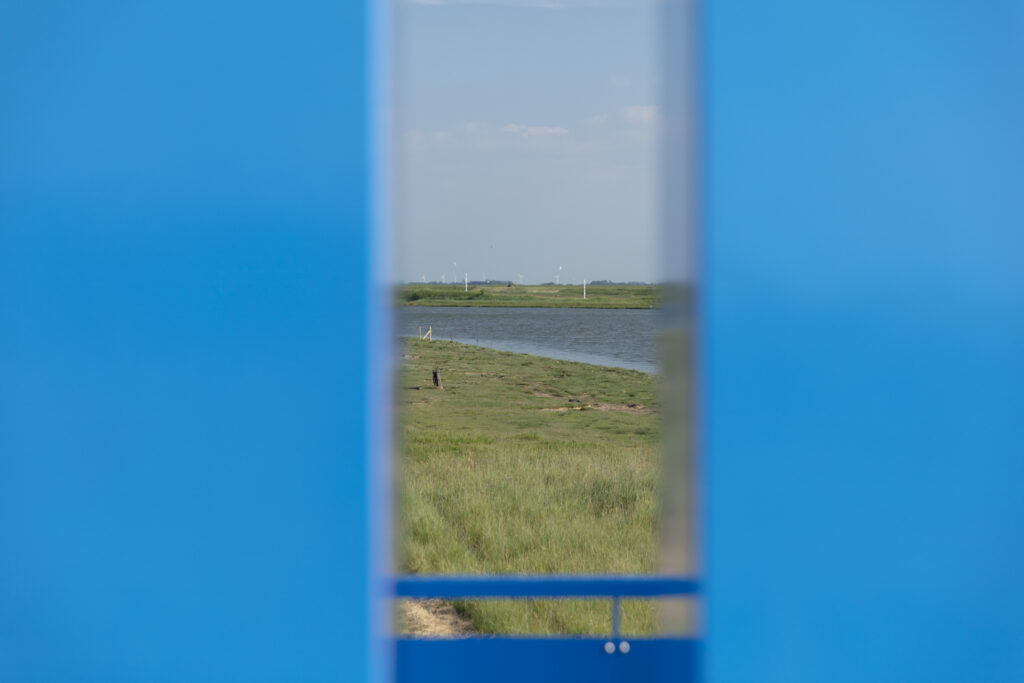
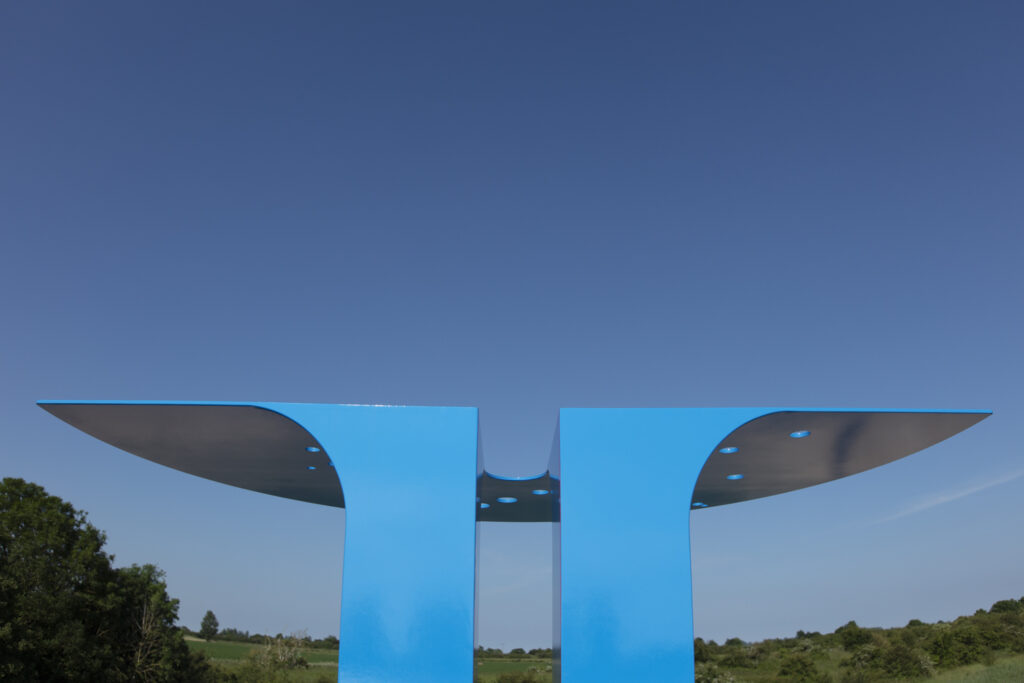
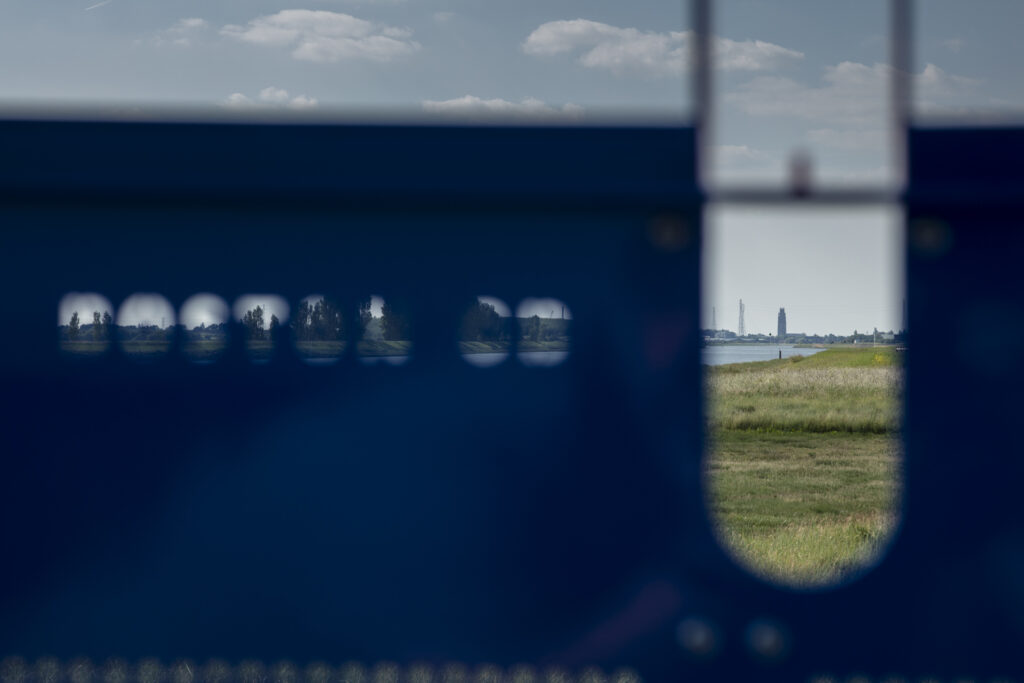
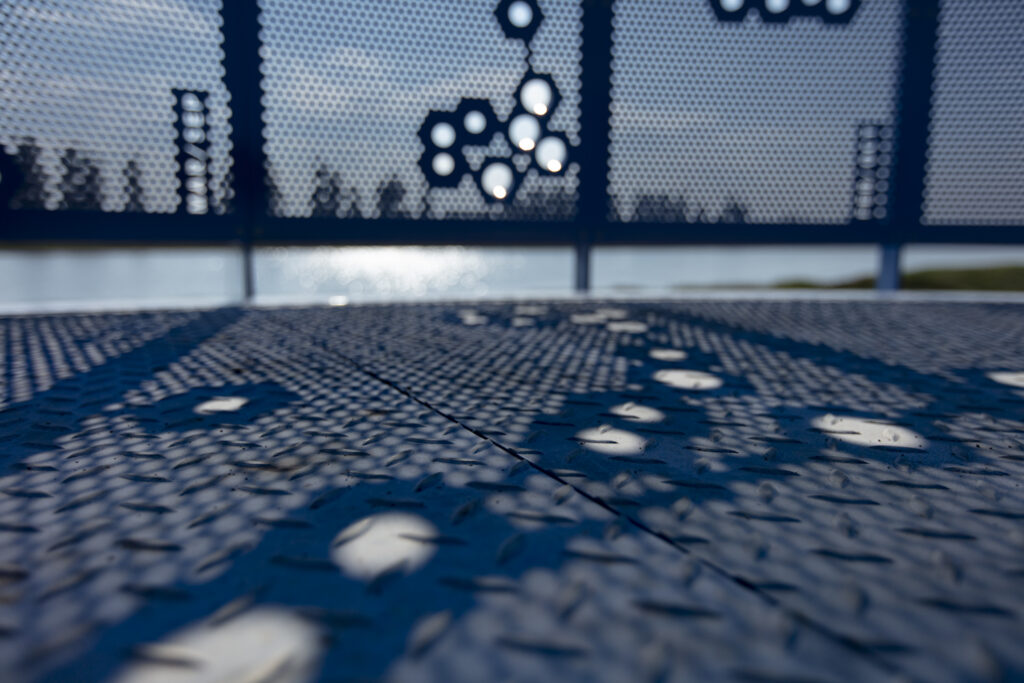
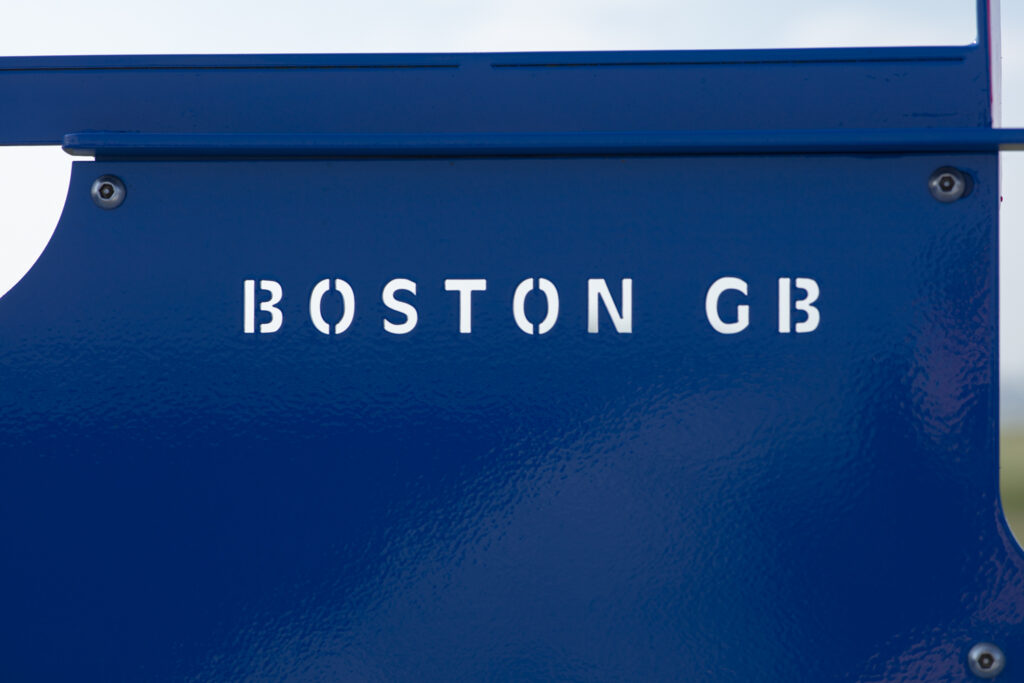

This is an ever-changing meeting place to sit, shelter and interact with other people, the landscape and the history of the site. Looking back to Boston and out to The Wash, beyond the horizon, the structure represents an abstracted composite of historic navigational instruments. Part sextant, part sun-compass, part orrery, it can be reconfigured and curated by visitors to alter seating positions in relation to views, shelter and shadows.
Set within a circular platform, the seating and structures form a destination that is never the same and echoes the expectation of departure for a journey to the unknown. In doing so, it encourages repeated and numerous visits. Rotatable seating and foils interact with a scribed, stationary deck and wind vane referencing timeless tools of navigation in an interplay of form and shadow.
HORIZON WAS MADE POSSIBLE THANKS TO LINCOLNSHIRE COUNTY COUNCIL, TRANSPORTED, ARTS COUNCIL ENGLAND, RSBP FRAMPTON MARSH AND BOSTON BOROUGH COUNCIL.
The sculpture can be found by the Pilgrim Fathers Memorial, close to Havenside Country Park, a short 15-minute drive outside of Boston’s town centre, it overlooks The Haven – a magnificent salt-water section of the river Witham leading out to sea.
More information about visiting the park can be found here.
Photography of the installed artwork by Steven Hatton of Electric Egg.