Boston Buoys

The Boston Buoys Trail is a series of six stunning art installations re-purposing vintage navigational marine buoys.


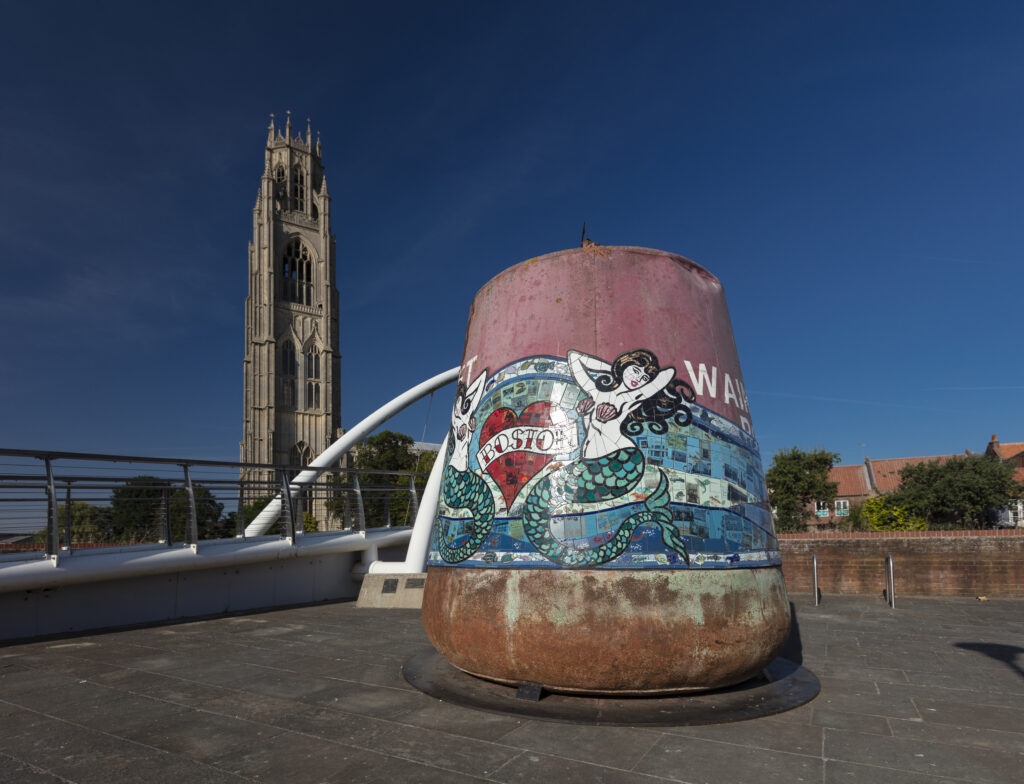

Due to the ongoing rosegarth square redevelopment, BY SEA and FLOTSAM buoys are temporarily inaccessible. we apologise for any inconvenience and will share updates on social media when they become viewable again. thank you for your patience.
The artworks, which were installed in 2021, celebrate Boston’s rich heritage and maritime connections, capturing our fascination with exploration across the world.
The mid-20th century buoys are imposing objects and come in fascinating shapes and styles, making them a stunning prospect to engage and capture the imagination of the artists, as demonstrated by the high level of interest in the commissions.
The Boston Buoys artworks aim to enhance pride in the town and attract more visitors to the area to experience and view this unique collection of distinctive artworks. We have appointed three experienced and inspirational artists.
Find out more about the six sculptures and the artists below and scroll to find a downloadable trail map, with multiple language options.
bex simon
Inspired by the hugely successful volunteer group, Boston in Bloom, and their award-winning floral displays, blacksmith artist Bex Simon has turned two buoys upside down to create enormous vases for sculptural forged flowers on either side of Haven Bridge on John Adams Way.
Bex studied Three-Dimensional Design in Metal at the Surrey Institute of Art and Design, later specialising in blacksmithing through a diploma in forge work skills at Hereford College of Technology. She set up her own creative blacksmithing business with support from the Prince’s Trust, beginning with private commissions and later moving into large-scale public artworks.
Her commissions include a forty-metre public artwork for Westminster Magistrates’ Courts, for which she became the first woman to receive the Tonypandy Cup, the most prestigious award given by the Worshipful Company of Blacksmiths.
Bex continues to explore traditional and contemporary approaches, drawing on historical forging techniques while applying them to modern artistic ideas. She is passionate about keeping blacksmithing traditions alive and evolving.
LEEWARD BLOOM
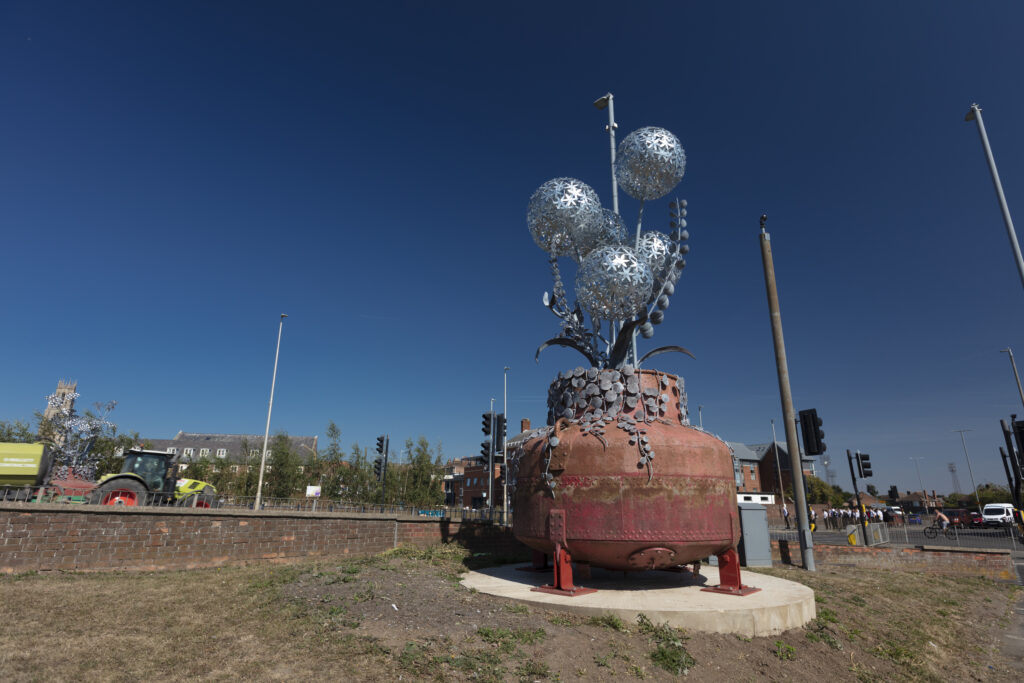


This is a red port-hand mark dating from the 1930s or 40s.
It has been used to mark the port side of the channel when heading inwards towards Boston Harbour in either the Lower Roads or the Freeman Channel.
The buoy would have had a steel top mark and a red flashing light for visibility.

This sculpture has been influenced by Ikebana, the Japanese art of flower arranging.
These arrangements are sculptural and modern interpretations of flower arranging where minimalism is of the essence. It includes alliums, samphire, eucalyptus and creeping Jenny.
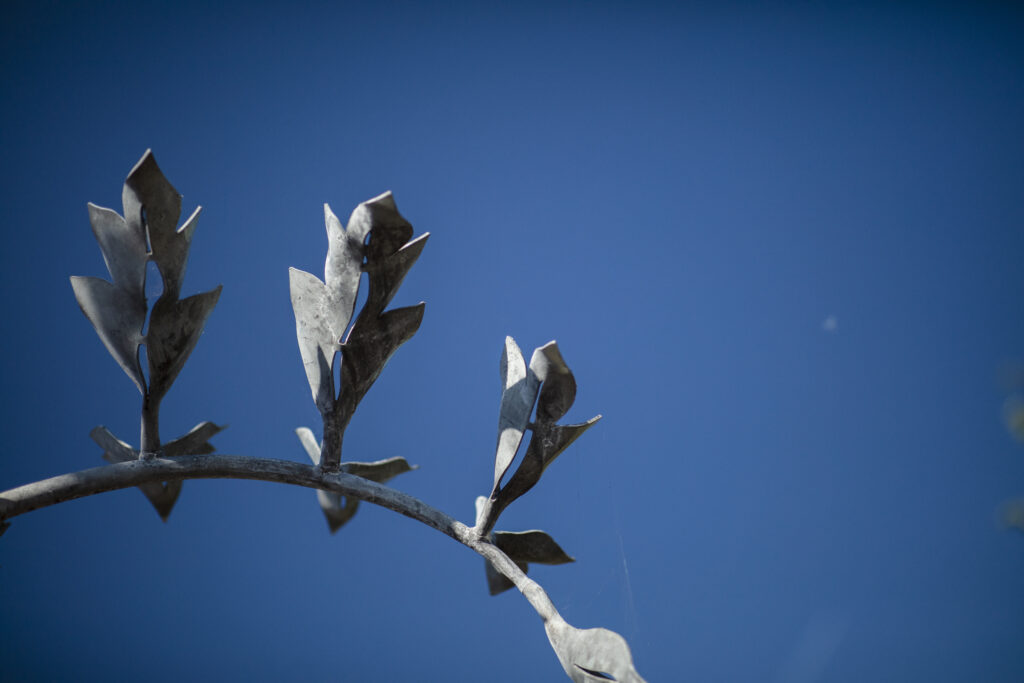
Local residents and school children took part in blacksmithing sessions to create the eucalyptus leaves which feature in the artworks.
Leeward Bloom can be found on the south side of Haven Bridge on John Adams Way, on the corner of the A1138, very near to its sister buoy
WINDWARD BLOOM



This is a green starboard hand buoy, of riveted steel, dating to the 1930s or 40s.
It has been used in various places throughout its life but always marking the starboard side of the channel when heading inwards towards Boston, in either the Lower Roads or the Freeman Channel.
The buoy would have had a steel top mark and a green flashing light.
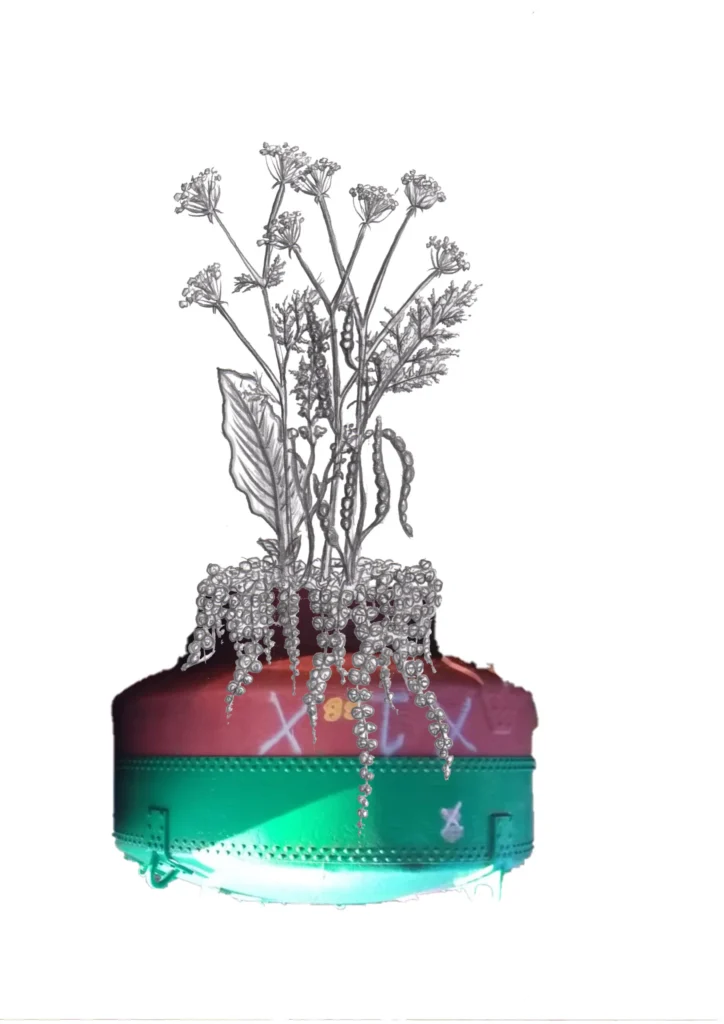
This buoy features plants that grow wild in the area, including cow parsley, rape seed pods and creeping jenny.
The artist wanted to set the heavy, riveted sea-buoys against these delicate native plants
Windward Bloom can be found on the north side of Haven Bridge on John Adams Way, set within the wildflower meadow beside Albert’s Car Park.
Located very close to its sister buoy, this can be accessed by following South Square Road past Boston’s Guildhall.
discover the trail map and explore the route!

jo chapman
Based in East Anglia and France, Jo Chapman is an established site-specific artist. Her works can be seen in parks, colleges, libraries and hospitals and her practice spans drawing, sculpture, and public art, creating abstracted works that respond to place and occupy spaces from galleries to streets.
Drawing on natural forms, shared histories, architecture, embroidery, and geometry, her work investigates ways of connecting traditional and contemporary processes.
With over 25 years’ experience delivering public commissions in the UK and internationally, Jo is committed to creating artworks that bring people together and enhance everyday environments.
Originally trained in embroidery, Jo now works across formats including stitch, drawing, installation, sculpture, and ceramics. She is a member of the Royal Society of Sculptors and an associate artist at the Sainsbury Centre for Visual Arts.
LAGAN


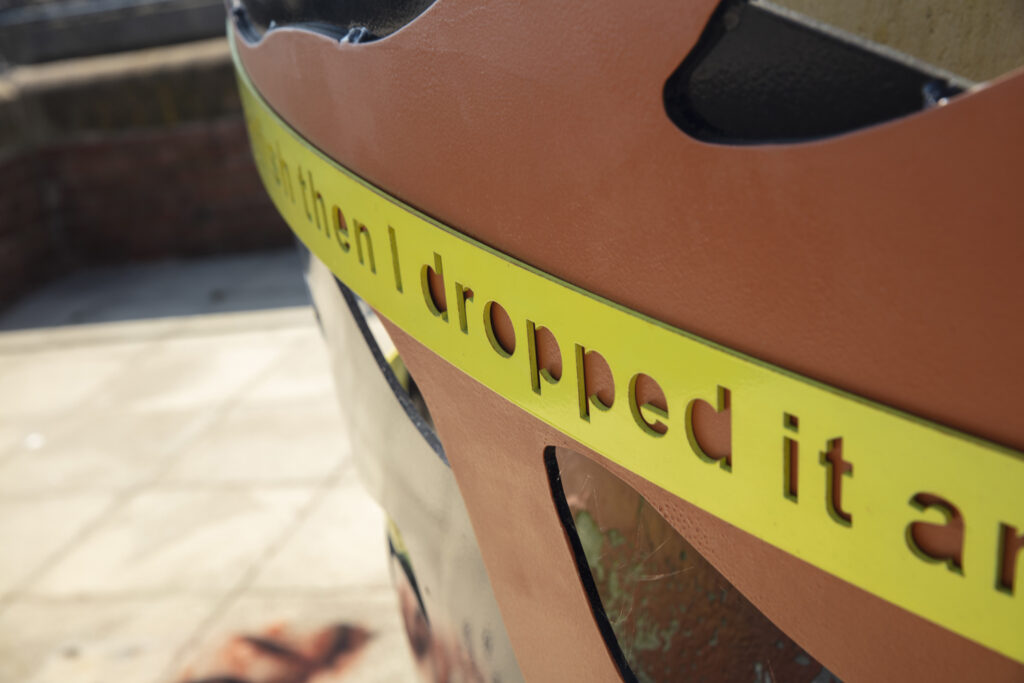


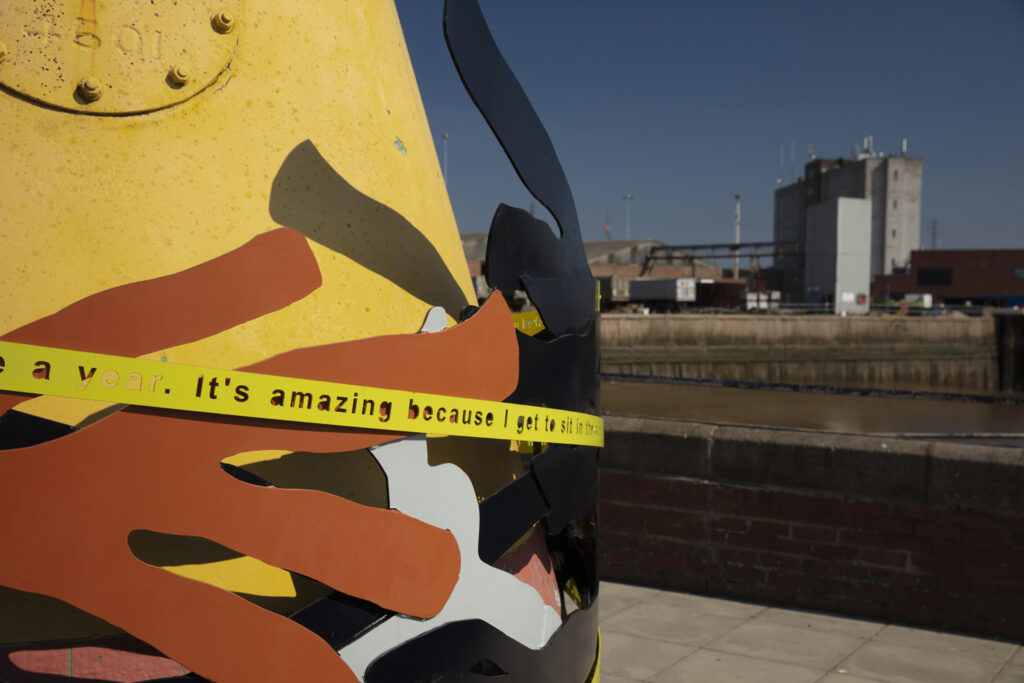


This yellow buoy was called a special mark and was not primarily used for navigation but to mark areas of particular interest, such as anchorage areas, dredging disposal sites or military exercise areas.
This buoy would have had a yellow St Andrews Cross steel top mark and was probably not lit.

This sculpture, overlooking the Haven, the Port of Boston and Boston’s flood barrier, reflects on Boston’s maritime history.
The buoy is entwined with seaweed as though washed up on the tide, and features quotes from local resident’s stories of important journeys.
The buoy is its original state, allowing the marks and dents to tell its history, reminding us of the journeys, storms and quiet moments of a lifetime.
The title, Lagan, is a maritime term for goods that are cast overboard and tied to a floating marker, such as a buoy.
This buoy can be seen at the bottom of London Road, where the River Witham meets The Haven. This one is a little out of town so requires a short rewarding walk to reach.
FLOTSAM
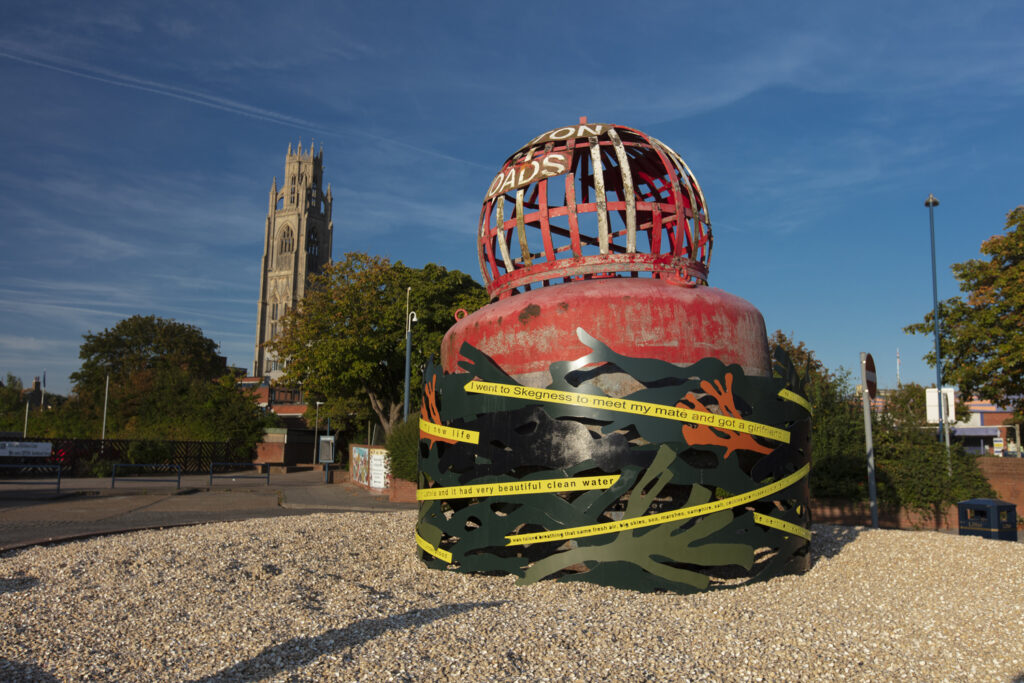


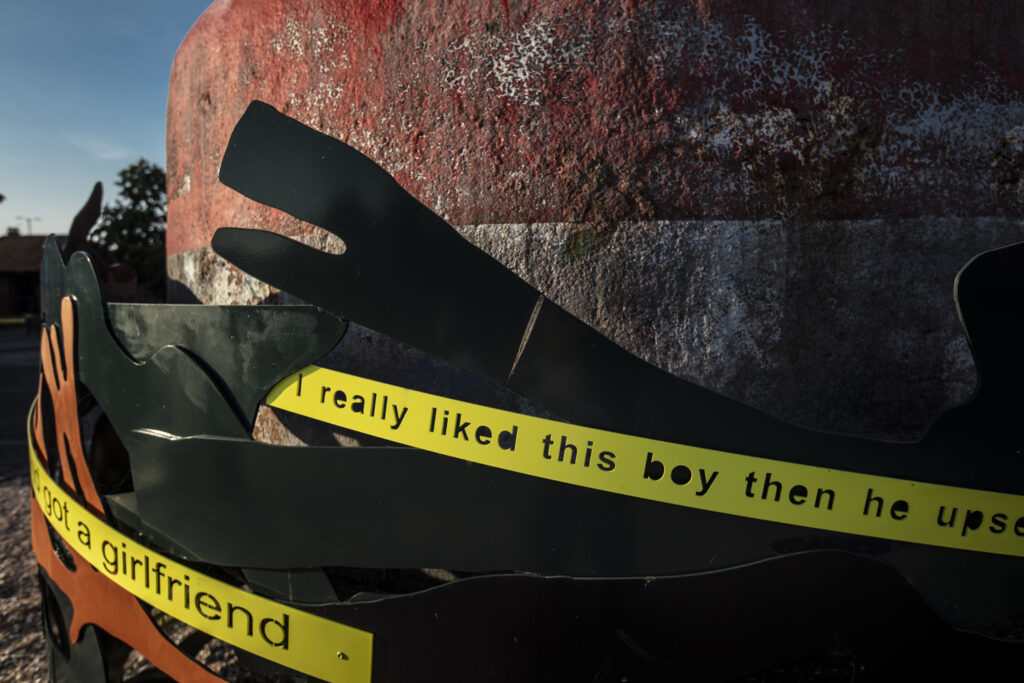


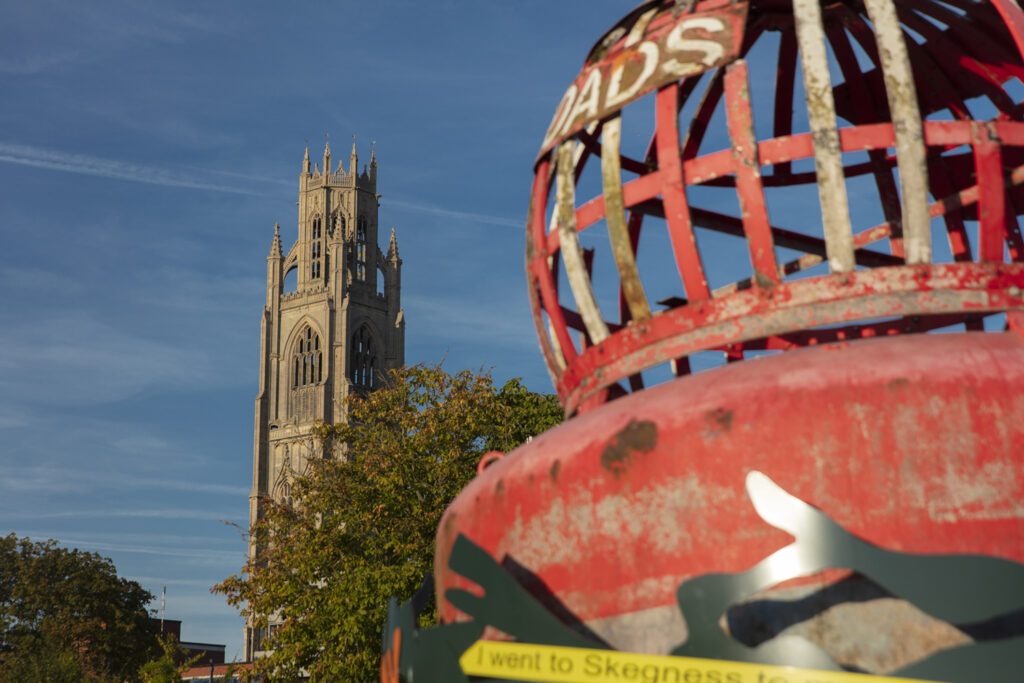

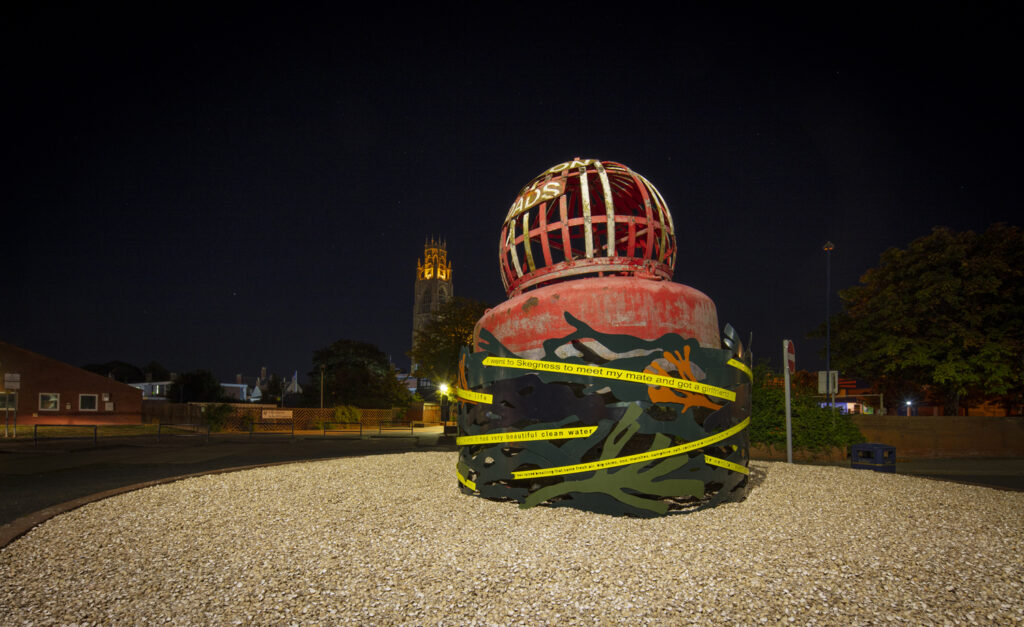
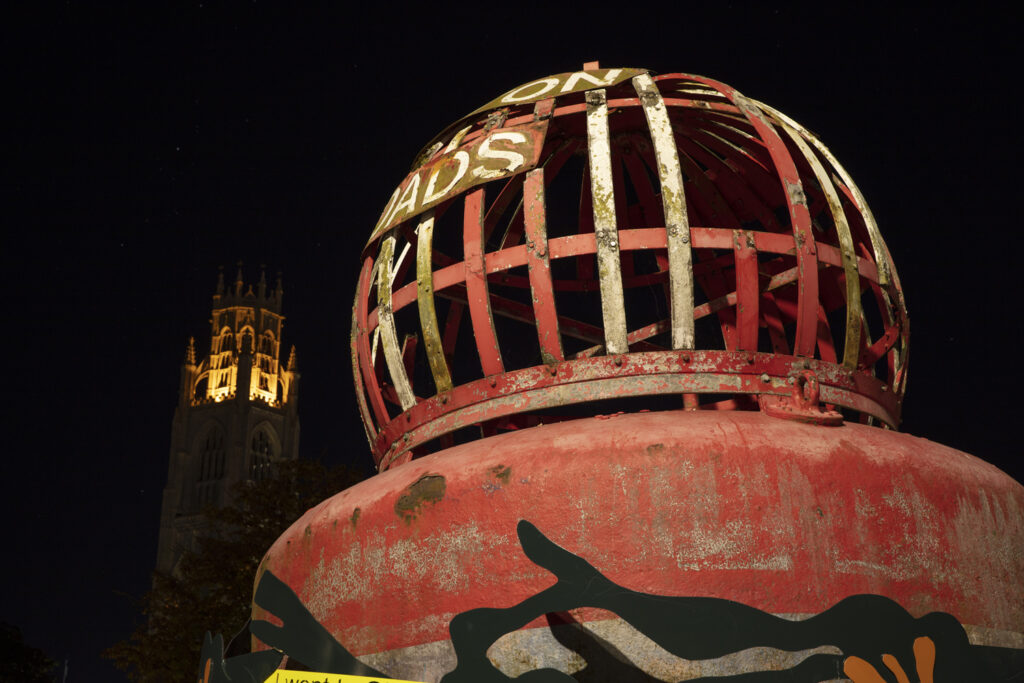
This was a safe water buoy, identified by its red and white top mark, which indicated that any vessel could safely pass on either side of the buoy. It would have been lit by a white light.
The term ‘Boston Roads’ written on the side would have assisted mariners in knowing it was safe to anchor in the area.

Boston has a long history of travel across the seas and strong bonds with other countries. The town traded with cities across Northern Europe as far back as the 13th Century.
With St Botolph’s in the background and not far from the marketplace, this artwork reflects on Boston’s international connections. Nestled in a seaweed cradle, the sculpture includes memories of personal journeys to and from Boston.
The title Flotsam refers to the maritime definition of goods floating on the surface of the water as the result of a wreck or an accident.
Due to the ongoing Rosegarth Square redevelopment, BY SEA and FLOTSAM buoys are temporarily inaccessible. We apologise for any inconvenience and will share updates on social media when they become viewable again. Thank you for your patience.
Flotsam is located by Boston’s Bus Station on Rosegarth Street.
carrie reichardt
Carrie Reichardt has created mosaics for two of the buoys on the trail, inspired by the mermaids from Boston’s historic coat of arms and the motto ‘By Sea and by Land’.
Carrie Reichardt gained a First Class degree in Fine Art at Leeds University and has had a career spanning many media, including film, performance and sculpture. She is perhaps best known as a ceramicist and mosaicist, working internationally on large scale public murals.
A renegade who is revered in anti-establishment circles, Reichardt’s preoccupation with seditious ceramics places her within an artistic tradition extending back to William Morris.
She creates anarchic artworks where vintage floral, kitsch, royal and religious crockery is given a new twist by re-firing with layers of new ceramic decals They are modified in a “radical use of traditional things” and often adorned with skulls, cheeky slogans and political statements.
BY SEA

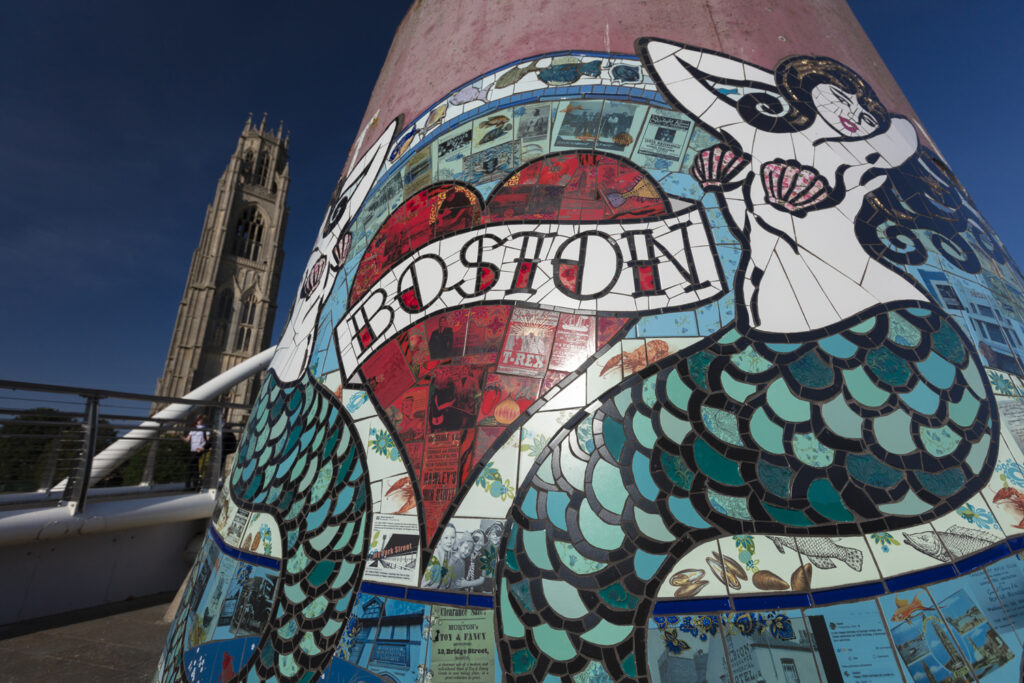


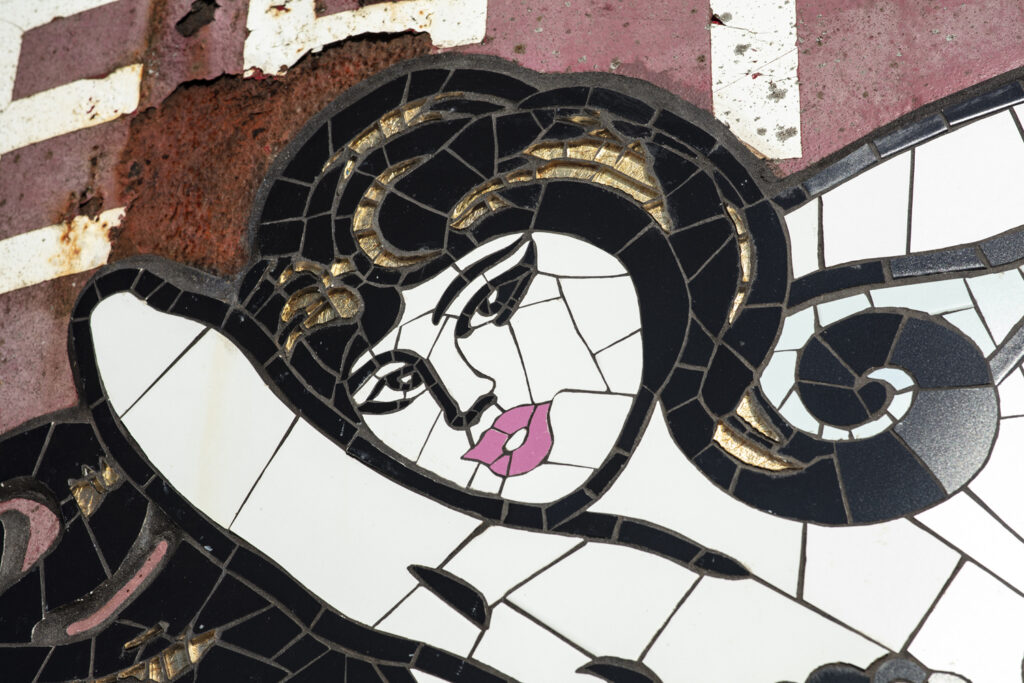


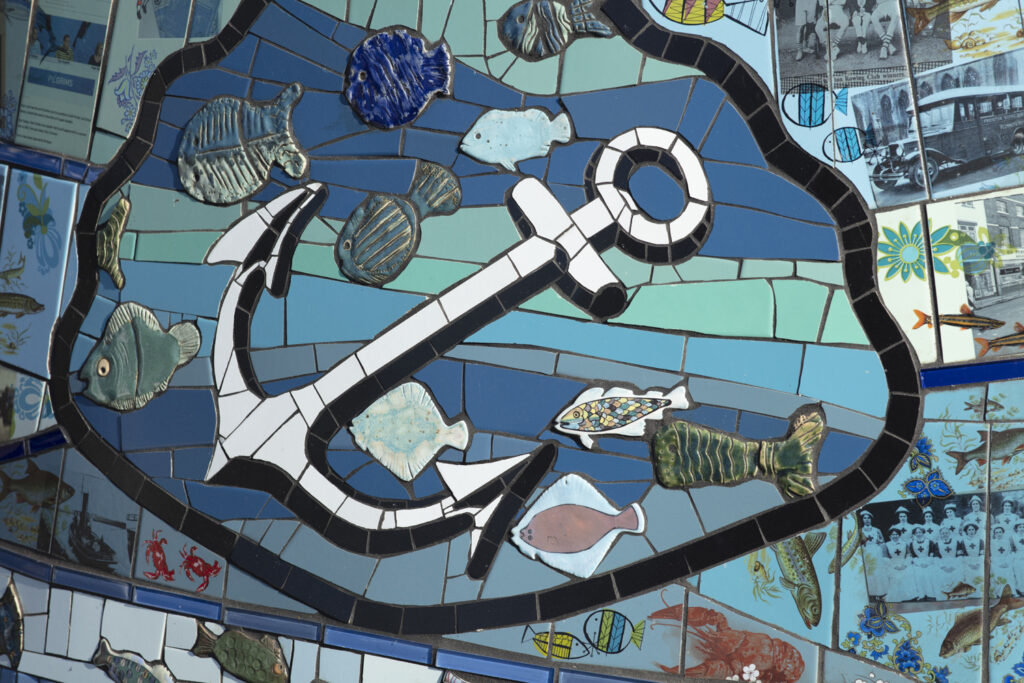
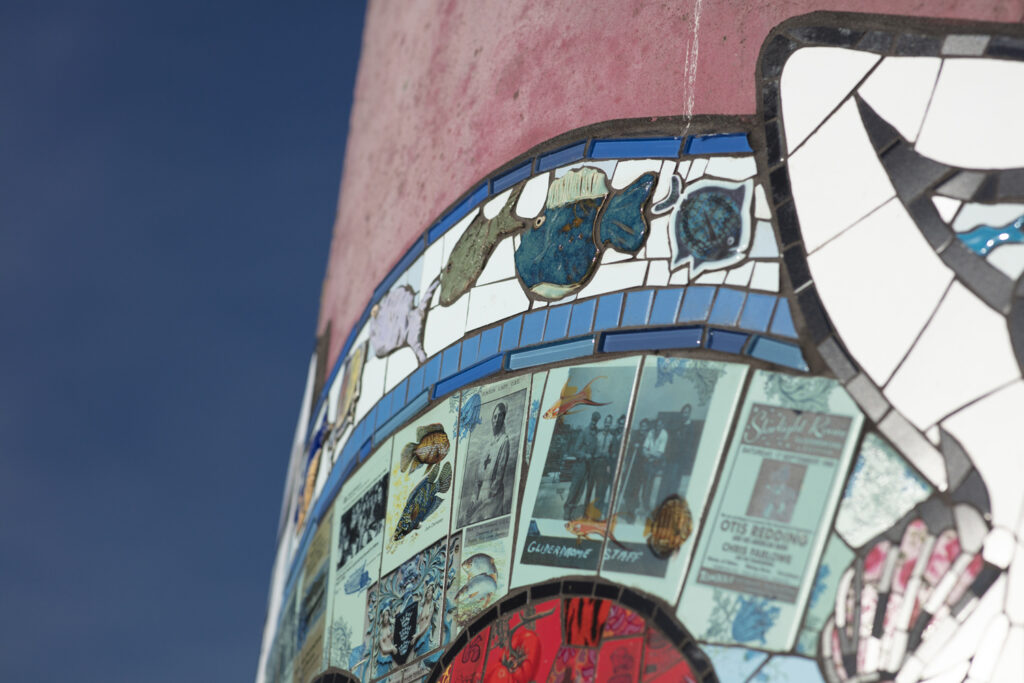
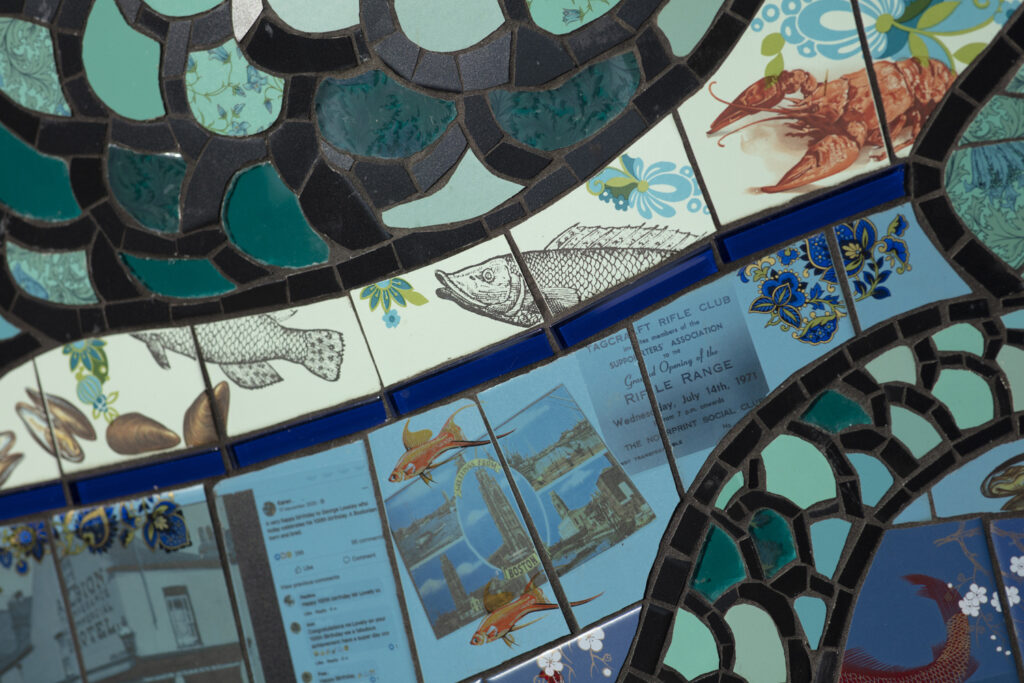


This is a red port-hand riveted buoy from the 1930s or 40s.
Its colour and shape helped the mariner to know which side to safely pass. The buoy would have had a red top mark, made out of steel.
This buoy marked a second channel, close to the coast off Wainfleet in Boston Deeps.
It was not lit and therefore seen during the day, by ships signal lamps or later by radar.
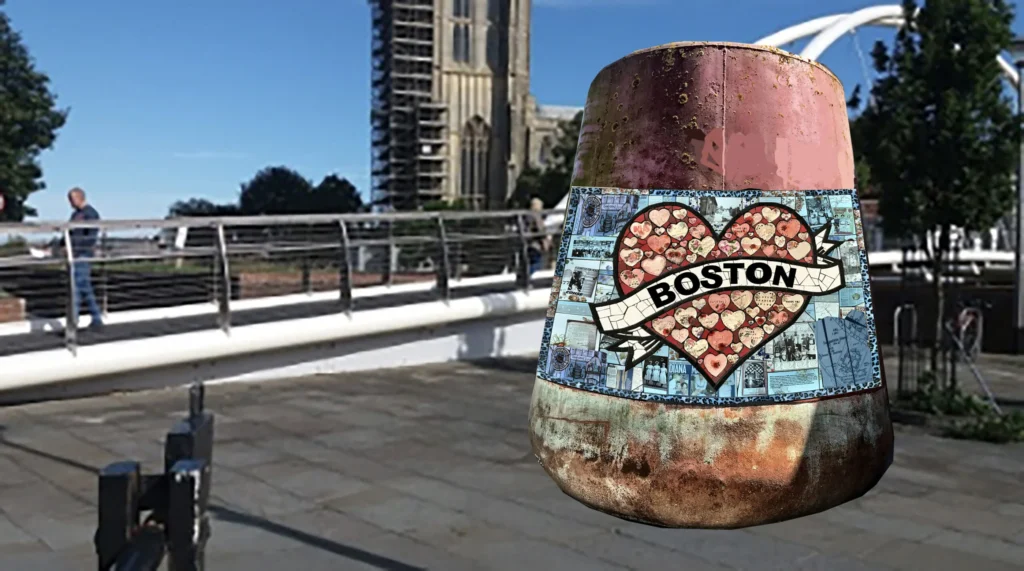
This artwork, By Sea, features fish made by local people and schools, tattoo-like marine images, combined with stories from the Boston Standard and photographs and quotes from archives in the area.
The artwork presents a different perspective on traditional history.
Due to the ongoing Rosegarth Square redevelopment, BY SEA and FLOTSAM buoys are temporarily inaccessible. We apologise for any inconvenience and will share updates on social media when they become viewable again. Thank you for your patience.
This buoy is located across the river Witham from St. Botolph’s Church, just off the marketplace.
By Land
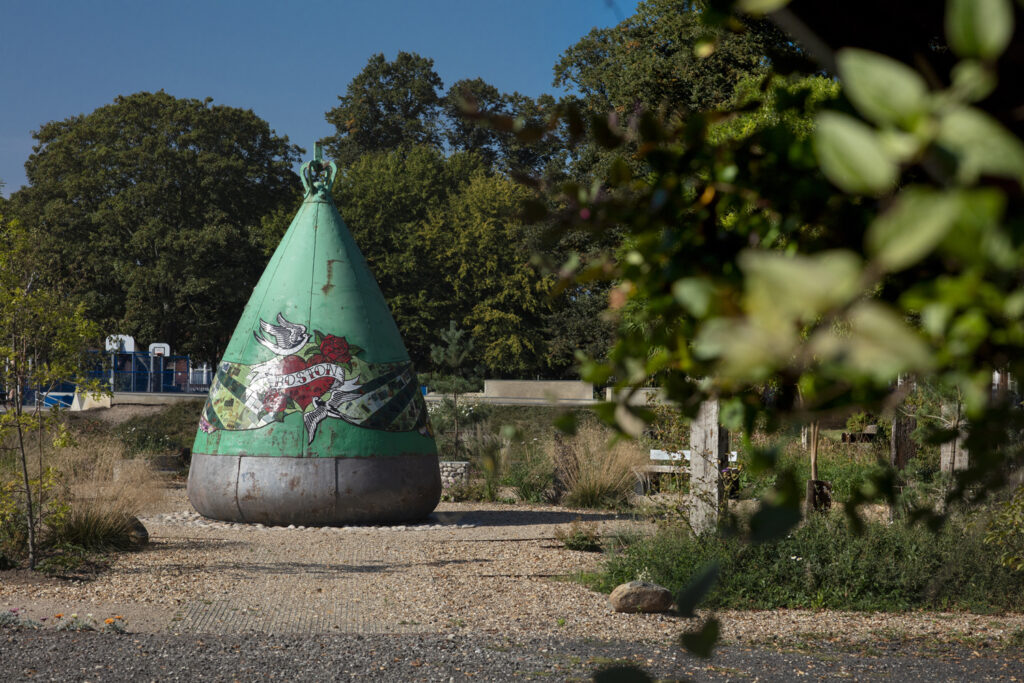
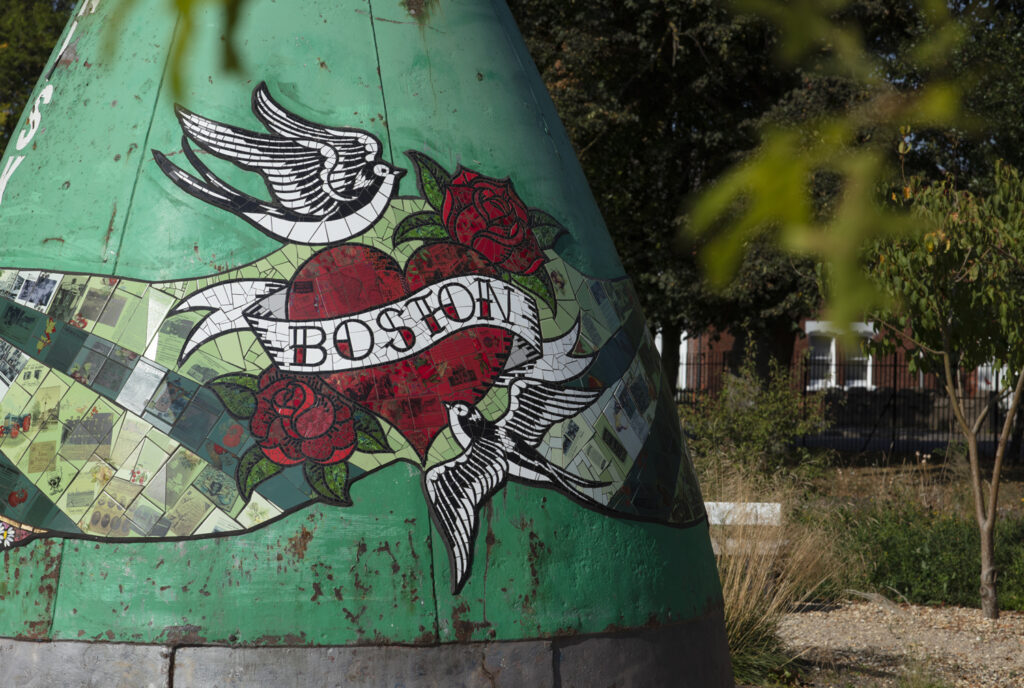



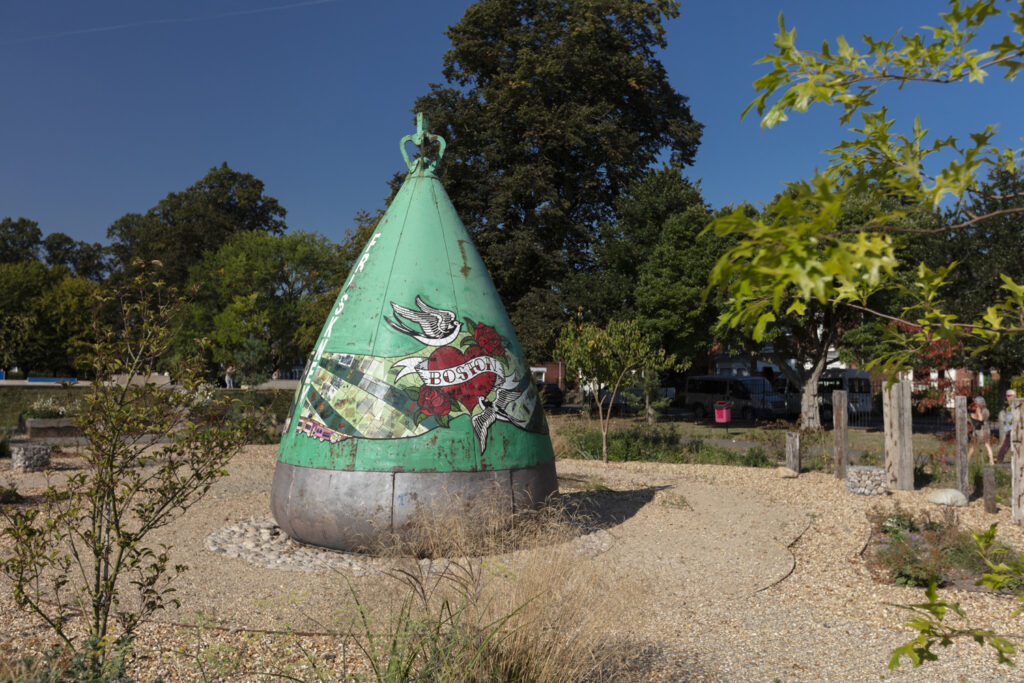




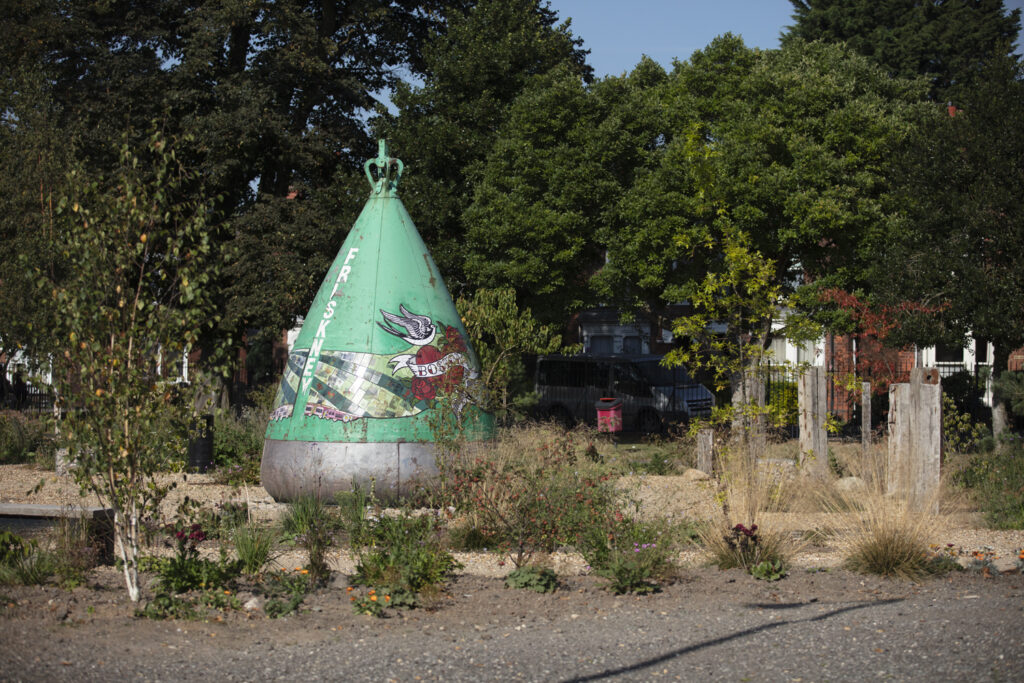
The buoy was originally a green, starboard hand marker.
It would once have been situated in the Boston Deeps, off the coast near Friskney, marking the second channel.
It was unlit but would have had a green conical top mark made of steel.

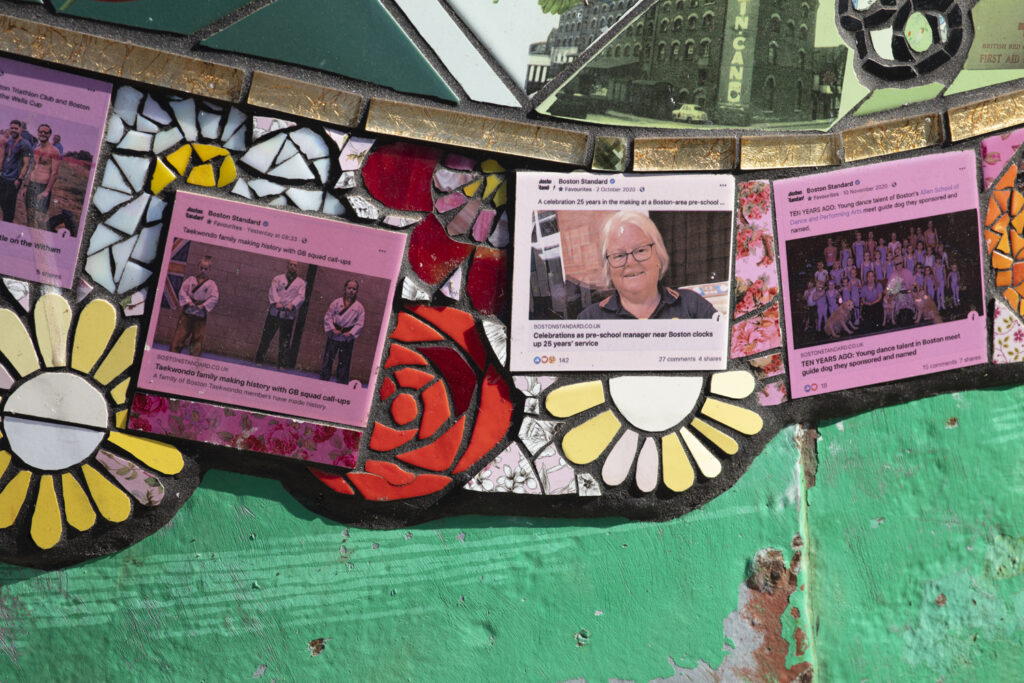
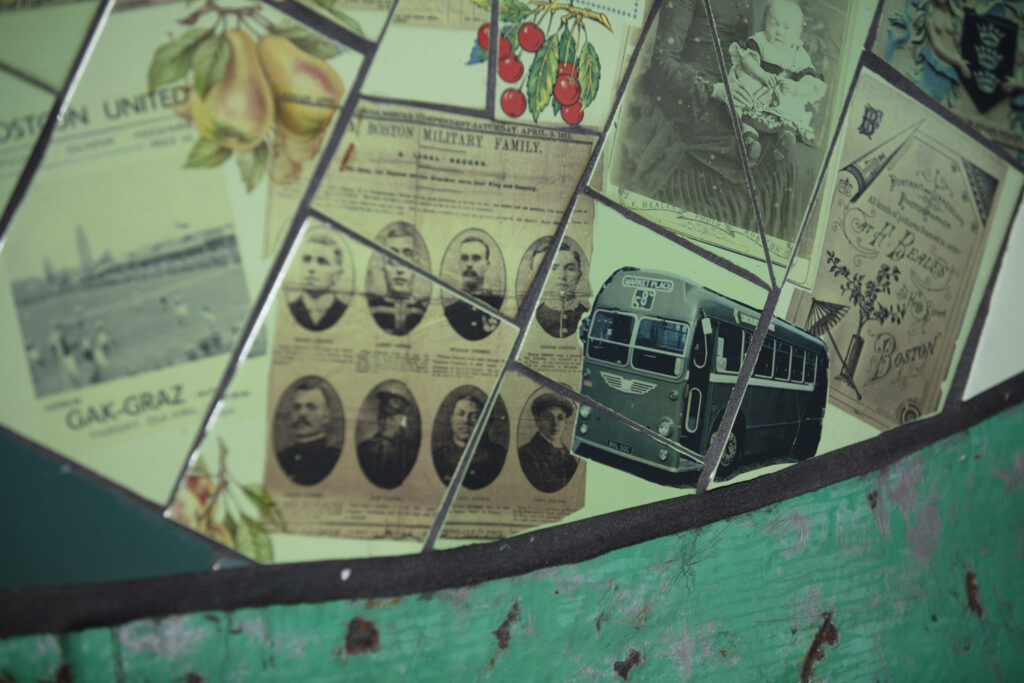
This artwork celebrates the wealth of the area’s fertile land and the bounty of the harvest.
Mosaics have been included from all over the world, alongside pieces made by local people.
The images were inspired by heritage seed packets and old agricultural and flower advertisements.

By Land can be found in the gardens of Central Park, in a garden landscaped especially for the installation of the buoy, designed by Jeni Cairns and created by Jeni and a team of volunteers from Boston in Bloom.
Find translated trail maps here

The Boston Buoys Trail project was lead Transported, in partnership with Boston Borough Council, with support from Boston Big Local, Boston in Bloom and the Environment Agency Boston Barrier Scheme, and made possible thanks to investment from Arts Council England.
Photos by Electric Egg, trail map designed by Laura Next Door.